Table of Contents
- The market numbers behind Bali villa investment in 2026
- Canggu: a mature market with saturated land prices
- Uluwatu: highest growth & new infrastructure
- Pererenan & Seseh: the best entry zones for 2026
- Sanur: the Icon Bali medical hub & stable rentals
- Land price & ROI comparison table by location
- How to calculate net rental yield on a Bali villa
- Build strategy for maximum return
- Frequently asked questions
The net rental yield on a professionally managed Bali villa runs 10–15% per year in 2026 — two to three times the 4–6% typical of Jakarta apartment rentals. That single number is why Bali villa investment in 2026 remains one of Indonesia's most compelling property asset classes, and why owners from Jakarta keep redirecting capital to the island's south. But the market average hides a deep divide: a villa on the right land at a sensible entry price can post a return on cost above 18%, while a villa bought expensive in a saturated market may yield just 6–7% — deposit-rate territory, at far higher risk.
This article dissects the four axes of the South Bali property market with indicative 2026 figures: Canggu, Uluwatu, Pererenan–Seseh, and Sanur. The focus is not a brochure but land price per are, occupancy profile, and real ROI — so your investment decision rests on data, not sentiment.
The market numbers behind Bali villa investment in 2026
Foreign arrivals to Bali reached 6.3 million in 2024 and are projected to break 7 million in 2026, with longer average stays driven by the digital-nomad and workation trend. Demand for private villas — not hotel rooms — is outgrowing the supply of quality stock, pushing the average daily rate (ADR) for premium 2–3-bedroom beachside villas to roughly IDR 4.5–9 million per night in high season.
At the same time, South Bali land prices have risen 15–25% per year over the past five years in popular corridors. That means two things for investors: land remains the primary capital-gain engine, but buying into an overheated location locks your capital in at the peak. Location selection is therefore the single decision that most determines overall ROI — with greater impact than design or even rental-management quality.
The core principle: in villa investment, land delivers the capital gain, the building delivers the rental yield. A location where land prices are still rising but not yet saturated offers the best combination: land appreciation plus rental cash flow. Paying peak prices in a mature market means buying yield while losing the upside.
Canggu: a mature market with saturated land prices
Land prices per are in the heart of Canggu (Berawa, Batu Bolong, Echo Beach) have reached IDR 1.5–3 billion per are in 2026, up more than 300% from 2019. Canggu is Bali's most mature villa market: annual rental occupancy can hit 80–90% because the area's brand is globally established, and resale (exit) liquidity is very high. For investors chasing security and easy resale, Canggu remains relevant.
The problem is the ROI math. With land that expensive plus build costs, total investment for a 3-bedroom villa in core Canggu easily exceeds IDR 8–12 billion, while ADR growth has not kept pace because new villa supply is dense and price competition is fierce. As a result, net rental yield in core Canggu has dropped to 7–9% — still healthy, but no longer the island's highest. Canggu now suits the defensive investor more than the growth hunter.
Uluwatu: highest growth & a new wave of infrastructure
Land price per are in Uluwatu in 2026
The land price per are in Uluwatu sits in a wide IDR 700 million–1.8 billion per are band in 2026, with ocean-view clifftop zones breaking IDR 2 billion per are. What makes Uluwatu the most aggressive growth story is the still-large price gap between inland Pecatu/Ungasan pockets and the cliff line — a gap that is closing fast as new roads and utilities arrive.
Uluwatu's landscape — karst cliffs, hidden beaches, world-class surf — creates product differentiation that Canggu cannot replicate. Clifftop villas command premium ADRs and attract a high-spend guest segment. With expanding access and a growing cluster of upscale F&B, Uluwatu combines high land capital gain with an 11–14% rental yield. One important technical note: parts of Uluwatu sit on coral rock strata, so foundation costs can run higher — a factor that must enter the budget (RAB) from the start.

Request the land price per are report (15 locations)
We compile a closed report with up-to-date land price per are ranges for 15 South Bali locations — including Uluwatu, Pererenan, Seseh, and quieter, under-the-radar pockets. Not published; shared only with serious investors.
Request the price report via WhatsAppPererenan & Seseh: the best entry zones for 2026
Pererenan and Seseh are the direct answer to Canggu's pricing problem. Bordering Canggu to the north and west, both areas enjoy a near-identical guest profile and access, but at land prices 30–45% lower: roughly IDR 900 million–1.8 billion per are in Pererenan and IDR 600 million–1.2 billion per are in Seseh in 2026. That spread is what changes the project math.
Because the entry price is lower while rental ADR sits just below core Canggu, return on cost for a new villa in Pererenan–Seseh often reaches 13–16% — the highest among the mature corridors. The areas also still hold pockets of land with rice-field views and beach access that are now rare in Canggu. For investors building from scratch in 2026, Pererenan is the sweet spot between established market liquidity and land prices that have not yet saturated.
Sanur: a revival driven by the Icon Bali medical hub & stable rentals
Villa investors often overlook Sanur for its quiet, family-oriented reputation — but that is precisely where the opportunity lies. The integrated health zone built around the Bali International Hospital (Icon Bali / KEK Sanur) is reshaping demand: medical tourism, long-stay guests, and expat families drive stable monthly rentals year-round rather than seasonally.
Land prices per are in Sanur sit at IDR 800 million–1.5 billion per are in 2026 — lower than Canggu with far less occupancy volatility. A Sanur net rental yield of 9–12% may not match Uluwatu, but it comes with more predictable cash flow and a low risk of low-season vacancy. Sanur suits the investor who prioritizes stability and diversification within a Bali property portfolio.
Land price & ROI comparison table by location
The table below summarizes the four main locations plus two benchmark zones, with indicative 2026 figures. ROI refers to annual net rental yield on total investment (land + building) for a professionally managed 2–3-bedroom villa, before land capital gain.
| Location | Land price / are (2026) | ROI (net yield) | Investor profile |
|---|---|---|---|
| Canggu (core) | IDR 1.5–3 billion | 7–9% | Defensive: high liquidity & exit, thin upside |
| Uluwatu | IDR 700M–1.8 billion | 11–14% | Growth: aggressive capital gain, premium ADR |
| Pererenan | IDR 900M–1.8 billion | 13–16% | Sweet spot: lower entry, Canggu-like rentals |
| Seseh | IDR 600M–1.2 billion | 12–15% | Emerging: cheapest land in the Canggu corridor |
| Sanur | IDR 800M–1.5 billion | 9–12% | Stable: medical hub, year-round rentals, low vacancy |
| Ubud (bonus) | IDR 500M–1.1 billion | 8–11% | Niche: wellness & retreat, seasonal |
How to read the table: the highest ROIs (Pererenan, Seseh) come from a low entry price, not from higher rents. The lowest ROI (Canggu) does not mean a bad location — it means the land price already prices in all future demand. Growth investors chase the right-hand column; defensive investors accept lower yield for liquidity.
How to calculate net rental yield on a Bali villa
Many brochures show a misleading gross yield. What you must calculate is the net rental yield: annual rental income after all operating costs, divided by total investment. The formula is simple:
- Gross annual income = average ADR × nights occupied (occupancy × 365).
- Operating costs = rental management (15–25% of revenue), housekeeping, electricity & water, pool, garden, repairs, and taxes. Together these usually erode 30–40% of revenue.
- Net yield = (gross income − costs) ÷ total investment (land + building + furnishing).
An indicative Pererenan example: a 3-bedroom villa, total investment IDR 6.5 billion, average ADR IDR 5 million, occupancy 65% → gross income ≈ IDR 1.19 billion. After 35% operating costs, net income ≈ IDR 770 million, or a net yield of ≈ 11.8% — before land appreciation that can add 15–20% to asset value per year. This is how you compare locations apples-to-apples, not through marketing numbers.
Build strategy for maximum return in 2026
Buying land in the right location is only half the equation. The following three decisions determine whether your villa investment lands in the right-hand column of the table above:
- Build, don't buy ready. Ready-built villas typically carry a 30–40% developer margin. Building yourself moves that margin into your pocket and lifts return on cost directly — provided you use a trusted contractor with a transparent budget (RAB).
- Design for the market, not for personal taste. A 2–3-bedroom layout with per-room privacy, a private pool, and a workation workspace maximizes ADR and occupancy. An enclosed, air-conditioned eco-luxury concept also reduces tropical maintenance costs.
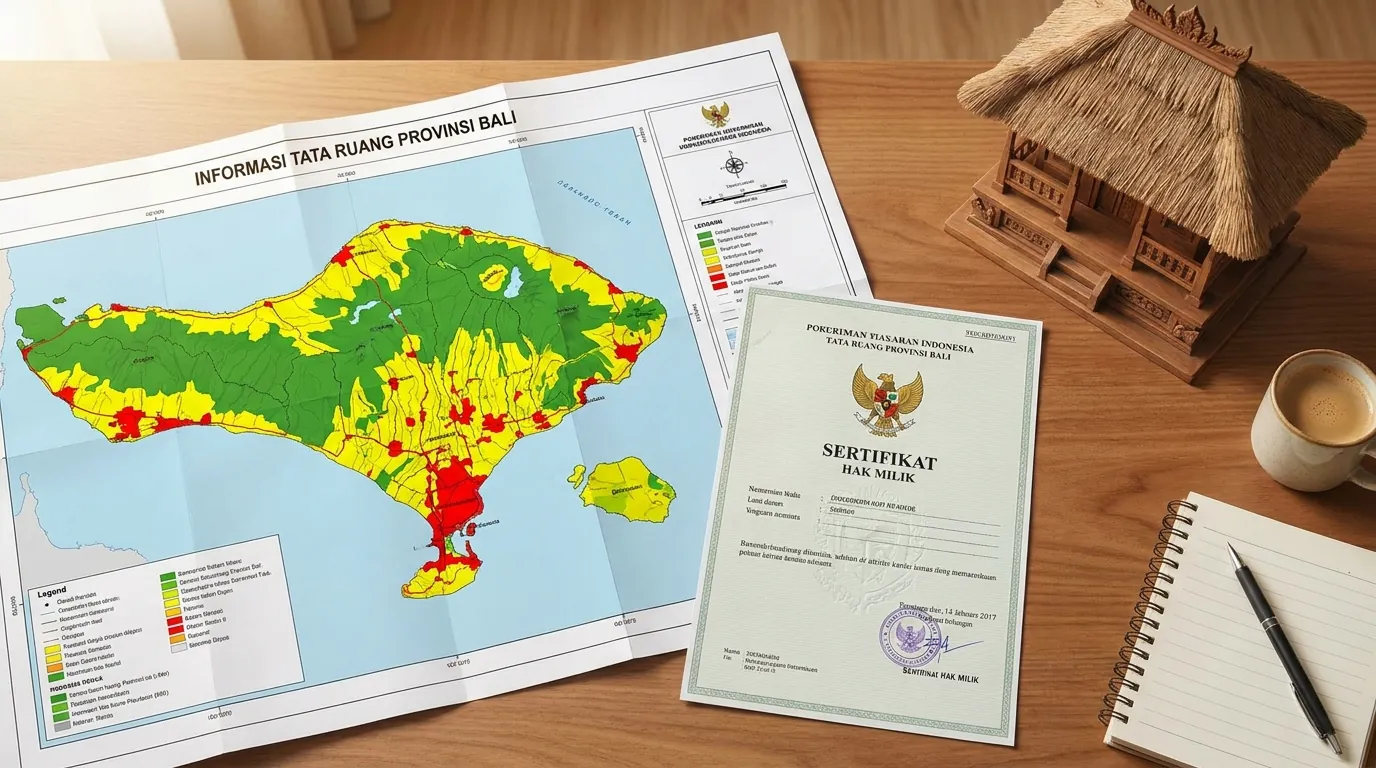
- Validate legality before paying. Check zoning (ITR), certificate status, and PBG/IMB eligibility before the transaction. The best ROI means nothing if the land turns out to be green-zone land where commercial rental is banned.
Consult on your villa investment strategy
Send us your budget, target location, and return goal. Our team will provide a numbers-based ROI projection, alternative location recommendations, and a realistic 2026 build-cost estimate — free, no obligation.
Consult on ROI via WhatsAppFrequently asked questions
Is Bali villa investment still profitable in 2026?
Yes, provided the location is chosen carefully. The net rental yield on a well-managed Bali villa sits in the 10–15% per year range — far above the 4–6% typical for Jakarta apartment rentals. The key is buying land in a location with rising demand rather than a saturated one like central Canggu.
What is the land price per are in Uluwatu in 2026?
The land price per are in Uluwatu in 2026 ranges from roughly IDR 700 million to IDR 1.8 billion per are depending on proximity to the cliff, road access, and ocean view. Premium clifftop zones can exceed IDR 2 billion per are, while inland Pecatu pockets are still available below IDR 800 million per are.
Is it better to invest in a Canggu or a Pererenan villa?
Canggu offers the highest liquidity and occupancy, but land prices are so high that ROI thins to 7–9%. Pererenan offers an entry price 30–45% lower with a near-identical rental profile, so new-project ROI typically reaches 13–16%. For investors building from scratch in 2026, Pererenan generally delivers a healthier return on cost.
Conclusion: Bali villa investment in 2026 remains one of Indonesia's best asset classes — but your return is determined at the location level, not the market average. Canggu for safety, Uluwatu for growth, Pererenan–Seseh for the highest ROI, and Sanur for stability. Start from honest land price per are data and yield projections, then build — don't buy ready — to capture the developer margin for yourself.