Table of Contents
- Why Open-Plan Tropical Design Falls Short for Jakarta Owners
- The Eco-Luxury Concept: Enclosed, Cool Luxury Villa Design in Bali
- Premium Building Materials: A Coastal-Durability Spec Table
- Smart Home Villa Bali and Modern Tropical Interior Trends
- Choosing an Architect Contractor in Bali for an Enclosed Concept
- Conclusion
Roughly 70% of rental villas in South Bali are built around the open-plan tropical concept with no full walls — a style architects popularized for the European tourist market. Yet for owners from Jakarta who want to live in or rent out an upscale villa over the long term, this concept often falls short of comfort expectations. This guide examines luxury villa design in Bali from a functional standpoint: why the open concept has clear limits, and how the Eco-Luxury enclosed approach answers both the tropical climate and modern taste.
Why Open-Plan Tropical Design Falls Short for Jakarta Owners
Average daily temperatures in South Bali range from 27–32 °C with relative humidity of 75–85% year-round. In an open-plan layout without solid walls, the core living space cannot be thermally conditioned — air conditioning is wasted because hot, humid air flows straight in. For European guests on a short holiday, the open atmosphere feels exotic; for Jakarta residents accustomed to air-conditioned interiors, it becomes tiring after a few days.
Beyond the thermal issue, owners of open-plan villas consistently report four practical problems:
- Insects and reptiles. Without sealed windows and walls, mosquitoes, ants, geckos, and even small snakes get in easily — especially in villas near rice fields or vegetation.
- Humidity and mold. Furniture, textiles, and electronics deteriorate fast; expensive audio-visual equipment risks corrosion.
- Dust and pollution. Traffic and construction in areas like Canggu generate constant dust that settles across every open surface.
- Privacy and security. Open walls make a villa hard to secure, even though owners often leave it empty when they return to Jakarta.
As a result, the operating and maintenance costs of open-plan villas are actually higher, while long-term premium rental value is hard to sustain because corporate and family tenants prioritize the comfort of enclosed space. In practice, many owners from Jakarta end up retrofitting open-plan villas — adding walls, glass, and air conditioning — patchwork work that can cost 10–15% of the building's value, an expense that could have been avoided at the design stage. The concept decision is therefore best made before the final working drawings are approved, not after the villa is built.
Design note: open-plan is not wrong — it is ideal for pavilions, poolside lounges, and transition areas. The problem arises when the core living spaces (bedrooms, family room, kitchen) are also left fully open. The solution is a hybrid: enclosed core, open edge.
The Eco-Luxury Concept: Enclosed, Cool Luxury Villa Design in Bali
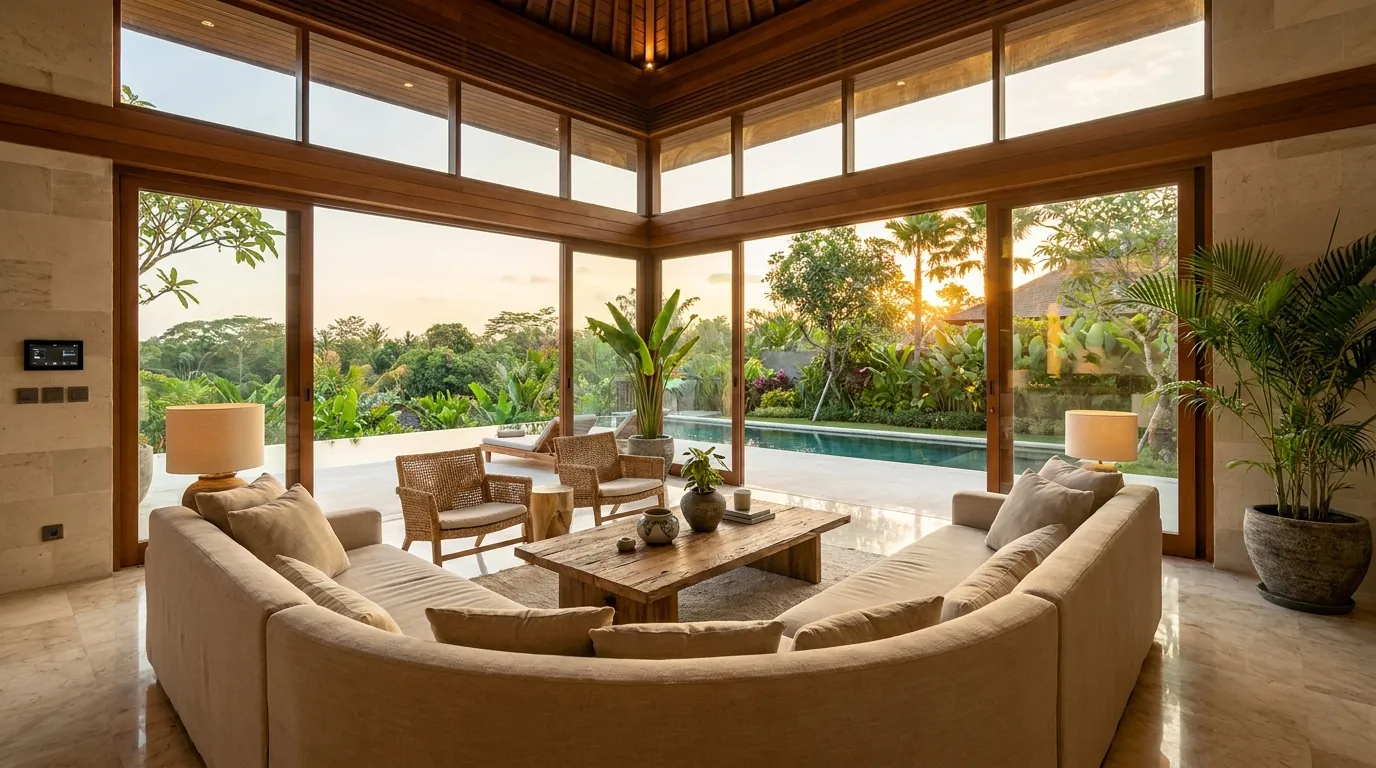
The Eco-Luxury concept resolves the limits above with the principle of enclosed core, open edge: the core living areas are designed to be sealed, air-conditioned, and thermally insulated, while Bali's tropical character is preserved through open pavilions, pools, and gardens. This eco luxury architecture Bali approach combines three layers of protection.
Building Envelope and Anti-UV Double Glazing
The core walls use lightweight blocks with thermal insulation, and large openings rely on Low-E anti-UV double glazing. This glass blocks up to 99% of UV radiation and cuts incoming heat load by 40–50% versus single glazing, so air conditioning runs efficiently and timber furniture and textiles do not fade quickly. The view stays fully open, but the space becomes cool, quiet, and insect-free.
Thermal Comfort and Energy Efficiency
With a tight building envelope, electricity consumption for cooling is actually lower than in open-plan villas that try to "condition outdoor air." A combination of insulated roofing, correct building orientation, and controlled cross-ventilation makes the Eco-Luxury villa energy-efficient — living up to the "eco" label while significantly lowering monthly operating bills.
Premium Building Materials: A Coastal-Durability Spec Table
The choice of premium building materials determines whether a luxury villa stays pristine after 5–10 years in Bali's hot, humid, salt-laden coastal climate. The table below summarizes recommended materials with indicative 2026 estimates and their technical rationale.
| Material | Application | 2026 Estimate | Technical Rationale |
|---|---|---|---|
| Grade-A teak | Flooring, frames, decking | Rp 25–40M / m³ | Natural oils resist termites & damp; marine-grade finish |
| Imported marble | Interior floors, bathrooms | Rp 1.5–4M / m² | Luxurious, low-maintenance, stable in A/C rooms |
| Andesite natural stone | Façade, wet areas | Rp 250–500K / m² | Moss- and weather-resistant; modern tropical look |
| Low-E double glazing | Core openings, view windows | Rp 1.2–2.5M / m² | Blocks 99% UV, heat & sound insulation |
| 316 stainless steel | Fencing, railings near beach | Rp 400–800K / m | Salt-corrosion resistant (marine grade) |
| Insulated roof tiles | Core roof covering | Rp 350–600K / m² | Dampens radiant heat; lowers A/C load |
The price gap between standard and premium materials does add 15–25% to the upfront budget, but it cuts annual maintenance costs and protects asset value — a key factor for owners renting out the villa as a long-term investment.
See the Premium Enclosed Villa Project Catalog
We'll send a portfolio of enclosed luxury villa designs — complete with floor plans, materials, and cost estimates — straight to your WhatsApp.
Request Catalog via WhatsAppSmart Home Villa Bali and Modern Tropical Interior Trends
A modern Eco-Luxury villa integrates a smart home villa Bali system as standard, not an add-on. Centralized control — via a wall panel or a smartphone app from Jakarta — manages cooling, lighting, blinds, security, and the pool. For owners who spend most of their time in Jakarta, the ability to monitor and control the villa remotely is practical value, not just a gimmick.
Commonly deployed smart home components:
- Automated climate control — A/C and dehumidifiers run on schedule to prevent damp while the villa is empty.
- Integrated security — CCTV, door sensors, and smart locks with real-time notifications.
- Lighting scenes — tropical mood lighting for pool and pavilion areas.
- Energy management — power-consumption monitoring and optional solar-panel integration.
On the aesthetic side, 2026 modern tropical interior trends move toward warm neutral palettes (taupe, cream, teak brown), natural textures (rattan, linen, stone), and clean architectural lines. Eco-Luxury combines the warmth of local materials with the technical comfort of enclosed space — a balance hard to achieve in a purely open-plan villa.
Value summary: an enclosed Eco-Luxury villa offers Jakarta-grade thermal comfort, low maintenance, high privacy, and energy efficiency — while keeping Bali's tropical soul through pavilions, pools, and natural materials. This is the formula that sustains occupancy and premium rental value.
Choosing an Architect Contractor in Bali for an Enclosed Concept
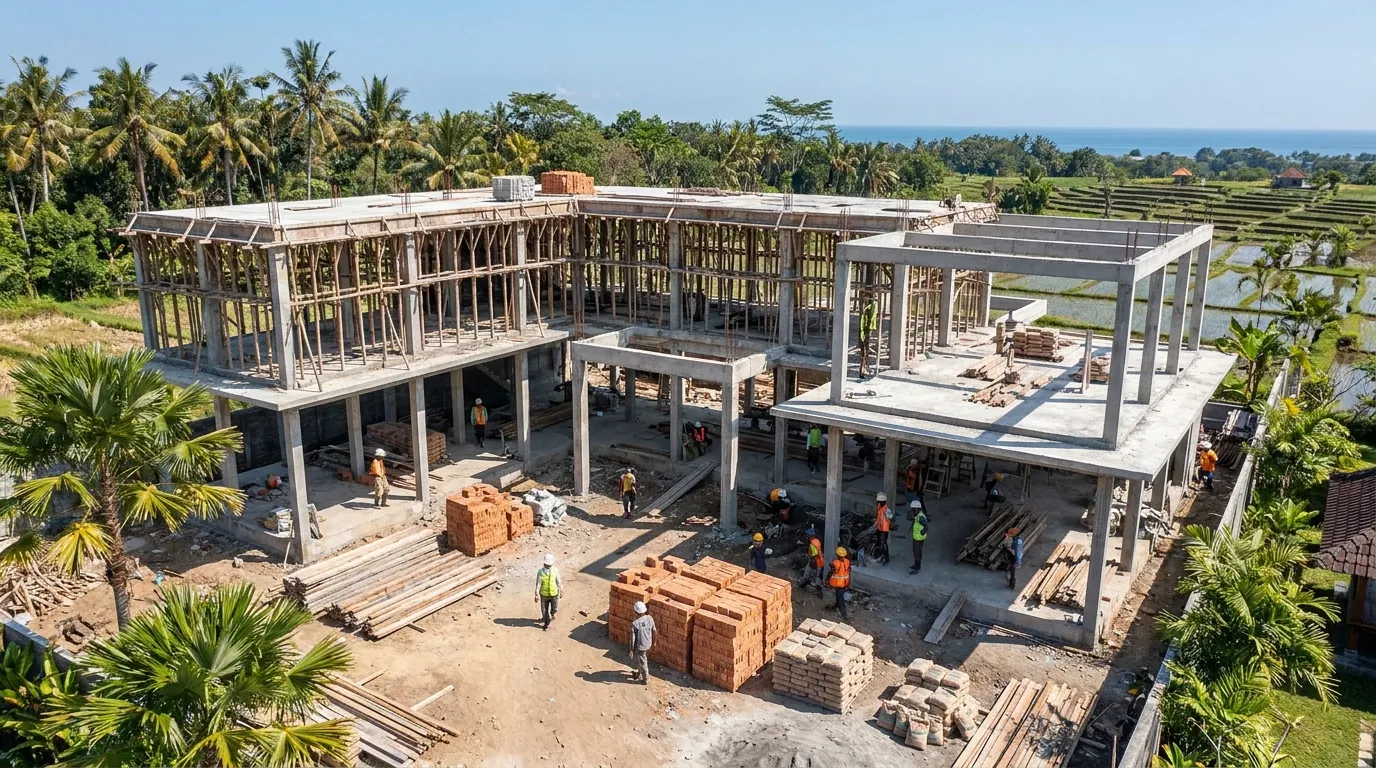
The enclosed concept demands greater technical expertise than open-plan: thermal-insulation detailing, double-glazing installation, condensation management, and smart home integration must be precise. When choosing an architect contractor in Bali, make sure the team has a real portfolio of enclosed villa projects, written material specifications in the bill of quantities (RAB), and experience handling the coastal climate.
Key questions before signing a contract: does the contractor provide a thermal-performance guarantee? What is the quality-control protocol for premium materials? Are there regular progress reports so you can supervise the project from Jakarta? The answers separate a professional full-cycle contractor from an ordinary service provider.
Aligning the Design with the Bill of Quantities and Budget
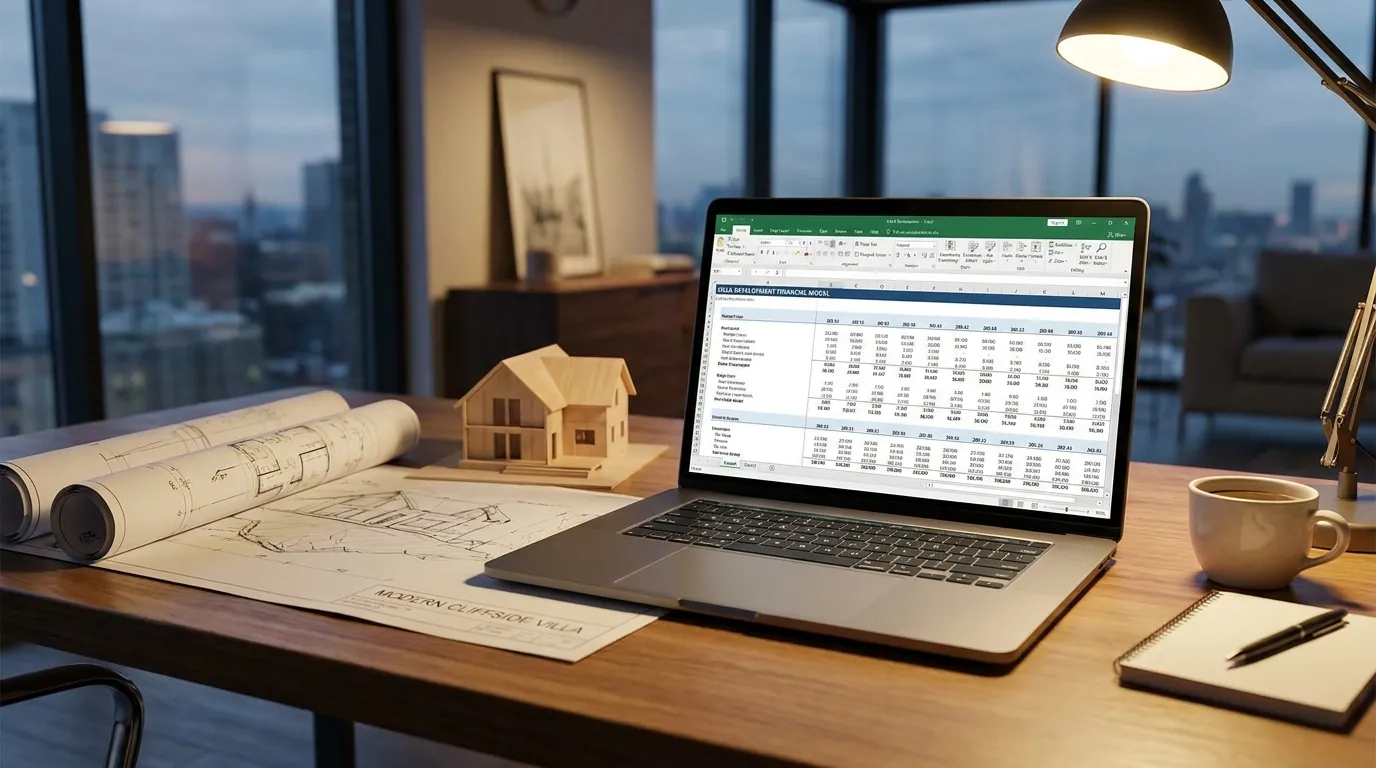
Good luxury villa design does not stop at three-dimensional renders; it must translate into a detailed bill of quantities (RAB) priced line by line. A credible architect contractor will lock material specifications — glass brand, timber grade, marble type — into the contract, so there is no quiet downgrade during construction. This RAB transparency is what protects a Jakarta owner's budget and ensures the finished result matches the Eco-Luxury concept promised from the outset.
Get an Eco-Luxury Design Consultation for Your Villa
Discuss the concept, spatial needs, and premium-materials budget with our architecture team. We'll help design an enclosed villa that's comfortable for Jakarta owners.
Consult via WhatsAppConclusion
The luxury villa design in Bali best suited to Jakarta owners is not the most open one, but the most functional. The enclosed Eco-Luxury concept — with anti-UV double glazing, thermal insulation, smart home systems, and coastal-grade premium materials — delivers comfort and privacy on par with city living, while preserving the tropical aesthetic through pavilions and natural materials. The result is an asset that is comfortable to live in, low to maintain, and able to hold premium rental value over the long term.