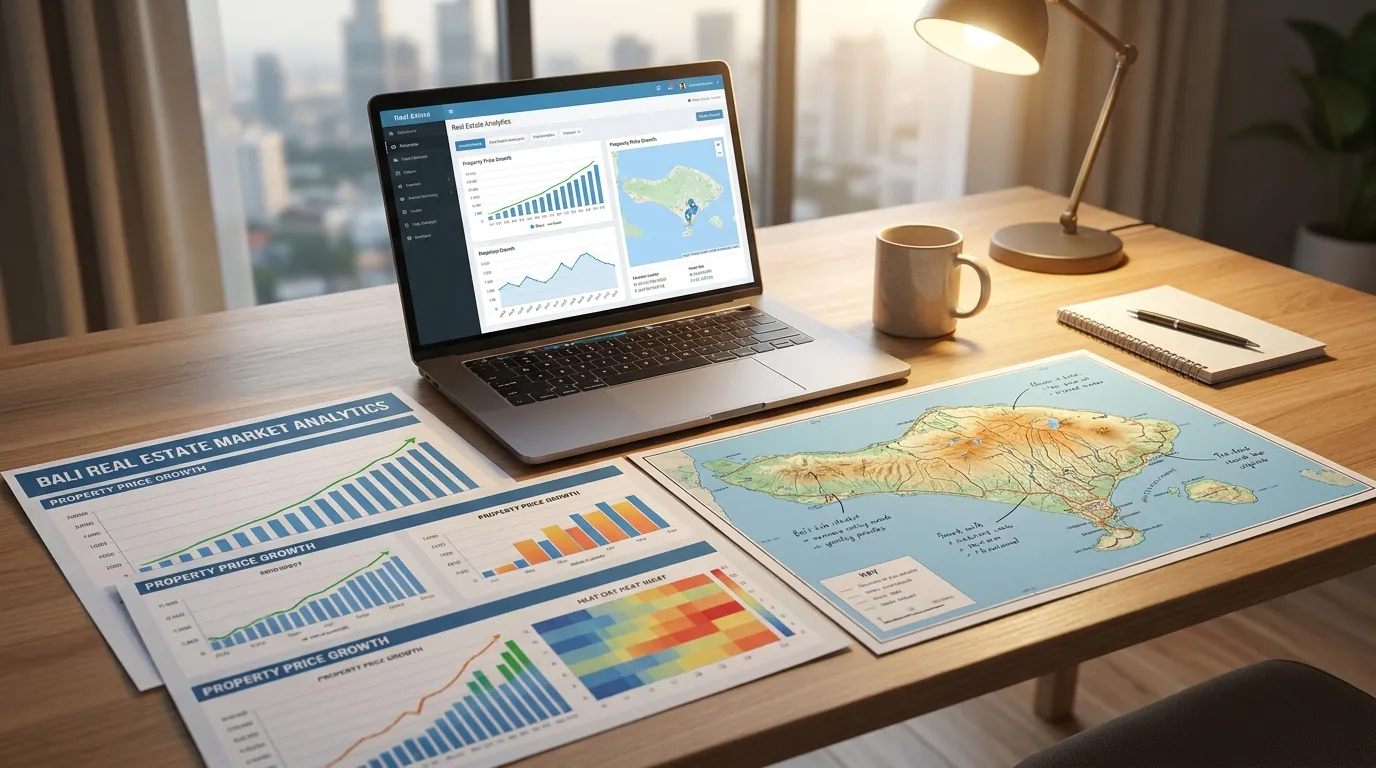
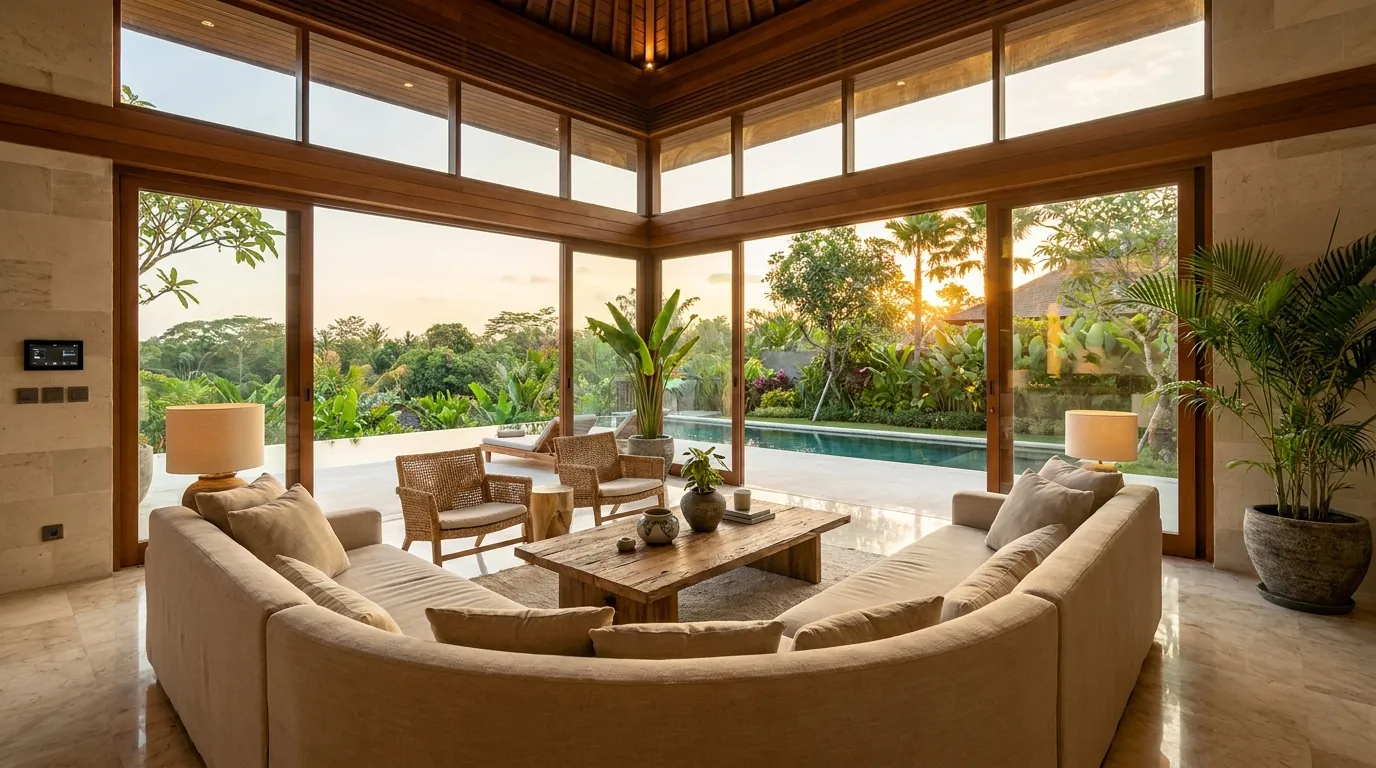
About 70% of our villa owners are based in Jakarta and can only visit the Bali site two to four times across an 8–12 month build. That is the core problem of remote villa construction: how do you control quality, cost, and schedule on a multi-billion-rupiah project from more than 1,150 km away, without a physical presence every week? This guide lays out the remote supervision system that turns your smartphone into a project control room when you build a villa in Bali from Jakarta.
The Challenge of Building a Villa Remotely
The three biggest risks in remote property building are not technical problems — they are information problems. First, data asymmetry: the contractor knows the site conditions, the owner does not. Second, delays detected too late — a foundation that slips by two weeks is only noticed once the wall stage starts running behind. Third, money paid fully up front while physical progress sits at just 40% — the classic setup for a stalled project.
In the conventional model, a Jakarta-based owner relies on photos sent voluntarily over a messaging app — unscheduled, unverified, and easily shot from an angle that hides problems. The fix is not more visits; it is replacing that voluntary photo stream with a structured reporting system verified by a third party.
Core principle: You don't need to be in Bali to control the project — you need data that is scheduled, objective, and tied to the release of funds. Good remote supervision makes a physical presence a choice, not a requirement.
Build a Villa in Bali from Jakarta: Three Layers of Supervision
The villa construction supervision system we run rests on three complementary layers of control, each closing a different information gap.
Weekly drone reports
Every Friday, a drone records aerial video and orthographic (top-down) photos of the entire plot. This footage reveals macro progress invisible in ground-level photos: the foundation footprint against setback lines, roofing progress, and site tidiness. Weekly orthographic shots are stacked to compare progress week over week objectively.
24/7 site cameras
A solar-powered CCTV camera with a 4G connection is mounted permanently facing the main work zone. The owner can open the live feed any time from Jakarta — at 9 a.m. to confirm the crew is on site, or at night to check material security. Footage is retained for 30 days as evidence in case of a progress dispute.
Structured progress reports
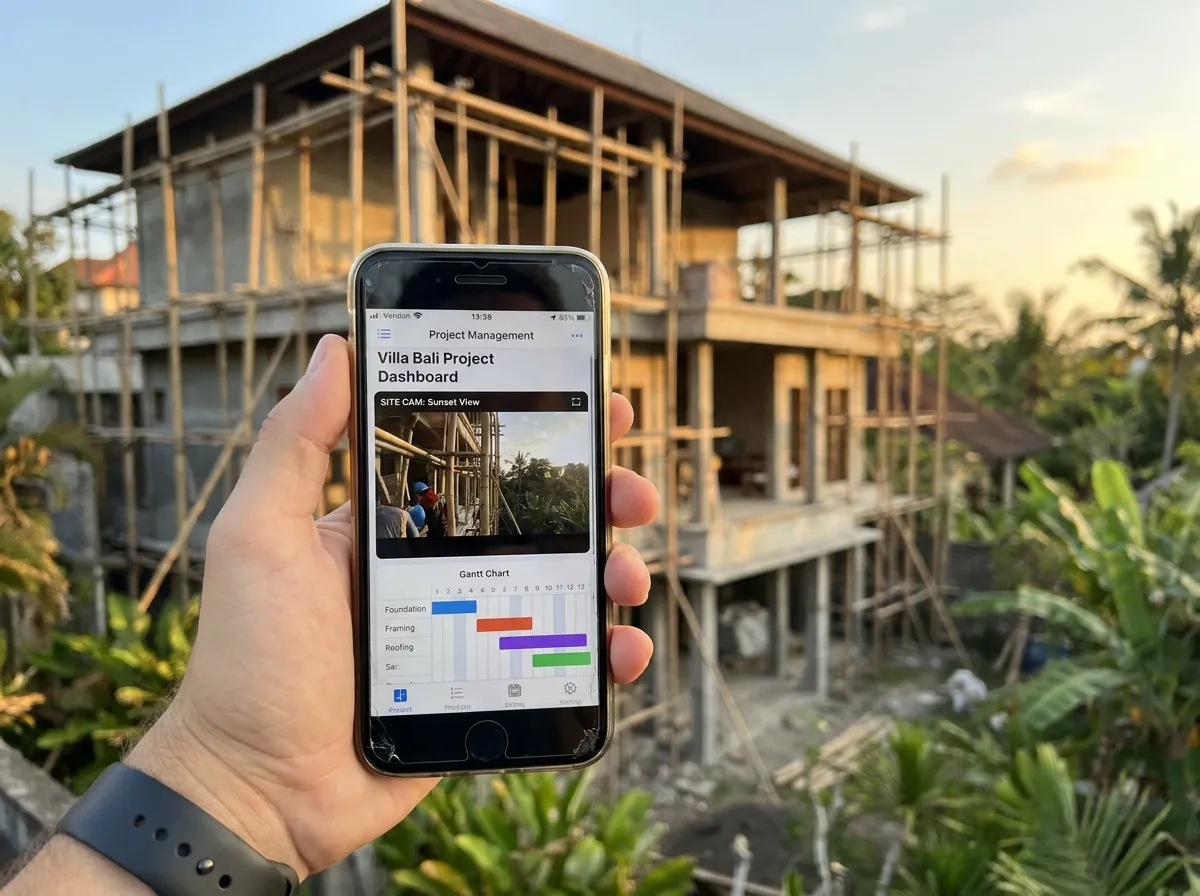
Each week the project manager issues a construction progress report with completion percentage per BoQ item, detailed photos of that week's work, notes on obstacles (weather, materials), and the plan for the coming week. The report is tied to the Gantt schedule, so any deviation appears immediately as the gap between the planned line and the actual line.
See a sample video report from an active site
Message us and we'll reply with a sample drone report and video from one of our live villa projects in Bali — so you can see exactly what our remote supervision looks like.
Request a sample report on WhatsAppThe Dashboard & Construction Management App
The heart of remote control is a single web-based construction management app that unifies every data stream. Instead of hunting for photos among hundreds of messages, the owner opens one dashboard showing project status in real time. The table below summarizes the supervision tools available to a Jakarta-based owner, with their frequency and function.
| Supervision tool | Frequency | What you see | Control function |
|---|---|---|---|
| Aerial drone report | Weekly (Friday) | Video + orthographic site photos | Verify macro progress & layout |
| 4G site camera | 24/7 live + 30-day recording | Live feed of the work zone | Crew presence & material security |
| Gantt dashboard | Updated daily | Plan vs actual per stage | Early delay detection |
| BoQ progress report | Weekly | % completion per cost item | Budget control & workmanship |
| Milestone inspection report | Per milestone | Inspection results before payment | Locks funds to physical progress |
The dashboard maps a Gantt schedule across foundation → structure → roof → MEP → finishing, each with a start date, target date, and actual percentage. When the actual line falls behind the planned line, the system flags it red, and the owner in Jakarta receives a notification before the delay becomes chronic.
Milestone Payments That Protect You
The financial mechanism that protects a remote owner most is milestone-based payment. Funds are released against verified physical achievement, not the calendar. An indicative schedule for a standard 2026 villa project looks like this.
| Milestone | Work stage | % of contract value | Release condition |
|---|---|---|---|
| 1 — Down payment | Mobilization & site prep | 15% | Signed contract & BoQ |
| 2 | Foundation & tie-beam complete | 20% | Foundation inspection report |
| 3 | Structure & roof installed | 25% | Structural inspection passed |
| 4 | Walls, MEP & plastering | 20% | Electrical & plumbing tests |
| 5 — Final | Finishing & handover | 20% | Zero punch list & key handover |
The logic is simple but powerful: the owner always pays after physical value is created, never before. At any point, the money spent never runs far ahead of actual progress. If the contractor stops working, the owner's exposure is limited to the small gap between the last milestone and real progress — structural protection against a stalled project that an up-front lump-sum scheme simply cannot offer.
Note: Reject any scheme that asks for more than 30% up front before the foundation is complete. A large down payment shifts all liquidity risk onto the owner and removes your leverage if quality slips.
Independent Technical Supervision & Building Quality in Bali
Verifying progress alone is not enough; building quality in Bali must be judged by a party different from the one doing the building. That is why we place an independent technical supervisor (construction management) who checks concrete quality via slump and cube-compression tests, structural dimensions and reinforcement, pipe-installation tightness, and compliance with the working drawings. This supervisor signs an inspection report at every milestone — and without that signature, the next payment cannot be released.
This separation of roles is crucial for a remote project: the Jakarta owner doesn't need to be a construction expert because an independent professional judges quality on their behalf. Bali's coastal climate — high humidity and salt air — demands specific details such as concrete with a low water-cement ratio, corrosion-resistant rebar in beachfront areas, and waterproofing layers on flat roofs; all of these become documented inspection checklist items in the dashboard.
To plan your budget and milestone stages, use our interactive villa calculator as a starting point for estimates before you consult with us.
Discuss your villa project from Jakarta
Walk us through your location, budget, and timeline. We'll prepare a transparent remote supervision plan and milestone schedule, complete with access to a demo dashboard.
Free consultation on WhatsAppConclusion
Building a villa in Bali from Jakarta is entirely feasible when three elements come together: structured reporting (drone, cameras, Gantt dashboard) that replaces voluntary information with scheduled data; milestone payments that bind funds to verified physical progress; and independent technical supervision that guarantees quality on the owner's behalf. With this system, your smartphone becomes the control room — and your trips to Bali become a pleasure again, not an anxious inspection.